AI Search · 6 min read · Mar 8, 2026
Your traffic is down. Your rankings aren't. Here's what changed.
Click-through from Google has dropped 30-60% on informational queries since AI Overviews launched. Here's the new playing field — and the three pages that still pull traffic.
If you've watched a content site over the last twelve months, you've seen a strange line on the analytics chart. Rankings flat or improving. Impressions flat or up. Clicks down a third to two-thirds. The result is the same as a ranking drop, but the dashboard tells you everything is fine. The dashboard is wrong about "fine."
The new search reality
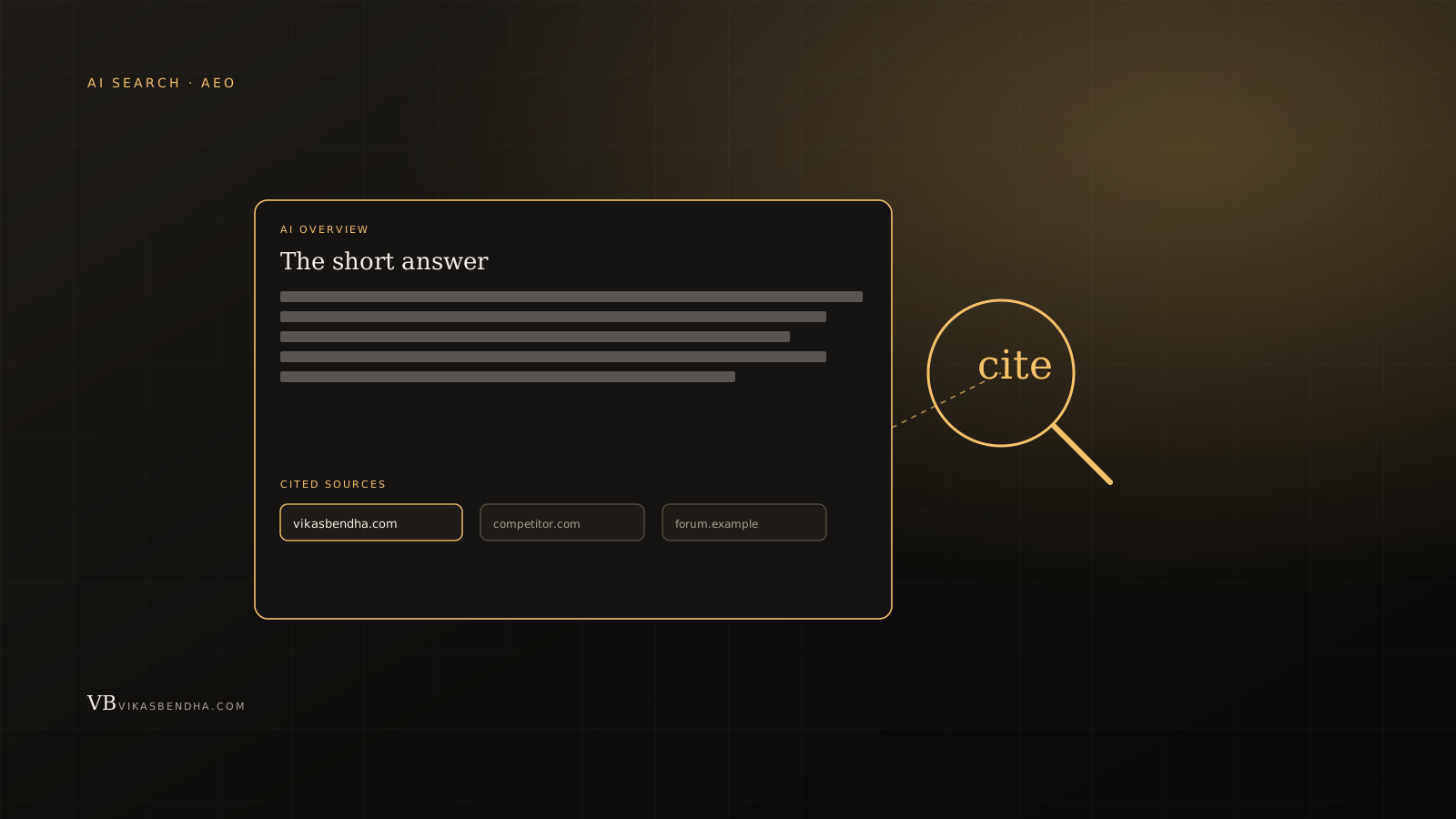
Google's AI Overviews now sit above the top organic result on most informational queries. The user reads the answer and never clicks. Industry trackers and search agencies have measured the click-through impact at roughly thirty to sixty percent, depending on intent. "How to," "what is," and "why does" queries have collapsed hardest. Transactional and navigational queries are mostly intact.
On top of that, ChatGPT search and Perplexity have shifted some of the same intent off Google entirely. The user asks the chatbot, gets a sourced answer, and again — never clicks the source unless they want to verify.
Why rankings stayed but clicks fell
Rankings are about ordering on the SERP. Clicks are about whether the user has any reason to leave the SERP. AI Overviews and chat answers reduce that reason. The skill of "appear at position #1" is now decoupled from the outcome of "a person visits your site." You can win the first and lose the second simultaneously, every day, on every page that used to do its work for you.
What zero-click queries look like in your data
Three signals are unmistakable when you look at the right reports.
- Search Console shows impressions roughly stable, clicks down — and the gap widens on queries containing question words.
- GA4 organic sessions decline disproportionately on pages that used to rank for "what," "how," or "best" patterns.
- Branded search holds; non-branded informational tanks. Your existing audience still finds you. New strangers don't.
The three pages that still pull traffic
Across audits run on a few dozen brands this year, three page archetypes resist the AI-Overview cliff. The first is sharp commercial pages — pricing, comparisons, deeply specific solutions. AI summaries don't replace the decision; they hand the user off. The second is original-research pages with proprietary data. The model has to cite a source, and you become it. The third is brand-led, opinionated essays. AI compresses summaries. It doesn't compress voice.
Generic informational content is the opposite of all three, which is exactly why it bled the most.
How to get cited inside the AI answer
Citation isn't lottery. Three ingredients raise the odds.
- Structured data on every meaningful page: Article, FAQPage, HowTo, BreadcrumbList, Organization. Schema.org spec is freely published; most sites still don't ship it.
- Concrete, citable claims with measurable outcomes. Models prefer to quote a sentence that has a number and a noun — "30-60% click-through drop" beats "clicks fell sharply."
- Author and entity signals. A page attributed to a real person, with a sameAs Wikipedia or LinkedIn link, gets cited more often than the same content under a generic byline.
The 90-day plan
Audit your top 20 organic pages by clicks-lost in the last twelve months. For each, decide: rewrite as a sharp commercial page, rebuild with proprietary data, reframe as an opinionated essay, or retire. Ship structured data and citation hooks across the survivors. Track AI Overview presence and ChatGPT citation manually for the first month. The full version of this audit is the 6-step AEO audit. The service is AI visibility (AEO / GEO).
Sources & further reading