AI · Jobs · 6 min read · Apr 5, 2026
What juniors should learn in 2026 (it isn't Figma, Tailwind, or Python)
If you're entering design, dev, or marketing now, the durable skills are not the ones the bootcamps are still teaching. Here's the honest list, and what to ignore even if it's free.
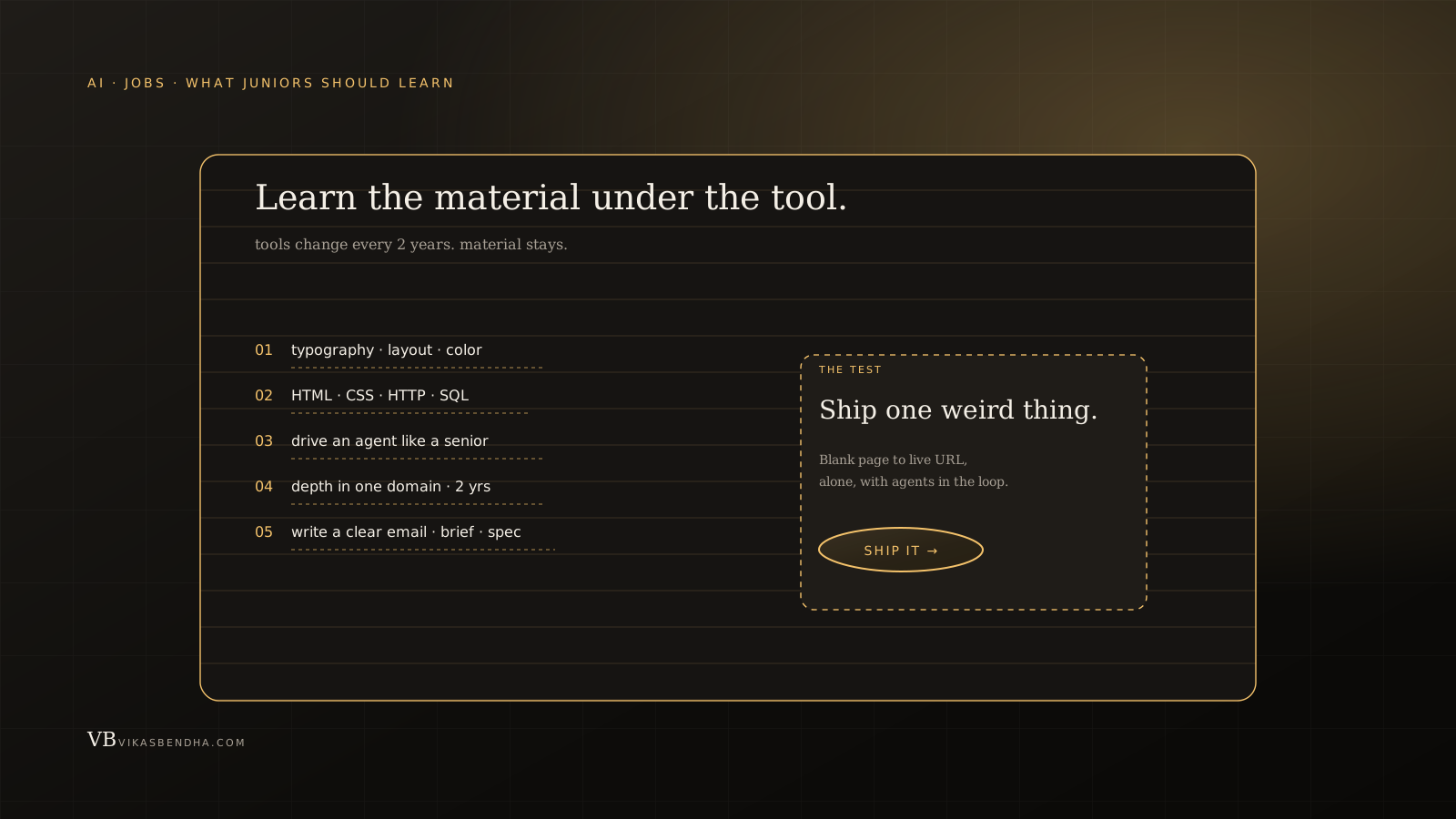
I get this question every week from someone in their first year of a portfolio career, or about to start one: "What should I be learning?" The answer has changed sharply in the last eighteen months. The list below is what I'd tell my younger sibling if they were entering the field today.
Learn the underlying material, not the tool that abstracts it
The bootcamps are still selling Figma, Tailwind, and a JavaScript framework as the path. Those are wrappers around something deeper, and the wrappers are the part AI is fastest at. Learn typography, layout, color, and HTML/CSS at a level where you can sit without any tool and explain why a page works. Learn data modeling and SQL before you learn an ORM. Learn what an HTTP request actually is before you learn fetch wrappers. The tools change every two years; the underlying material has been stable for thirty.
Learn to drive an agent like a senior engineer
This is the new literacy. It is not "prompt engineering." It is knowing how to scope a task tightly enough that a coding agent can finish it, how to read a diff at speed, how to recover when the agent goes off the rails, and when to stop the agent and write the code yourself. People who learn this in their first job will outproduce people who don't by a multiple, for the rest of their career.
Learn one thing deeply
The wide-shallow generalist played well in 2018. In 2026 the model is the generalist. Your edge is depth in something specific — a domain (healthcare, climate, e-commerce), a craft (typography, motion, audio), or a system (Stripe, Postgres, a particular rendering engine). Pick one. Sit in it for two years. The depth is what someone hires you for. The breadth, the agent provides for free.
Learn to write
If you can write a coherent email, a clear brief, a short specification, a tight piece of feedback — you will be in the top fifth of your peer group. AI lowered the cost of polish but it did not lower the cost of clarity. Clear writing is still rare and still expensive. People who can do it run circles around people who can't, regardless of role.
What to skip even if it's free
- Long courses on a single design tool. Learn the tool in a week. Move on.
- Tutorials on how to call an LLM API. Read the SDK docs once. That's enough.
- "Become a prompt engineer" content. The skill exists. The job title doesn't.
- Anything that promises you'll be "replaced" or "saved" by AI. Both predictions are noise.
- Building a portfolio of clones of well-known products. Build one weird thing instead.
The single test I'd give every junior
Pick a small problem in a domain you care about. Design, build, and ship a real product around it — alone, with agents in the loop. It doesn't matter if anyone uses it. The work of going from blank page to live URL by yourself, with the modern stack, is the credential. Six months of that beats two years of any course. If you want a longer read on the studio model behind this advice, see Inside a 1-operator AI studio.
The juniors I see thriving in this market are the ones who stopped waiting for permission and started shipping. The market rewards builders. The credential ladder is collapsing. If you're early in the field, that's good news for you, even if no one in your bootcamp will say so.
Sources & further reading