AI · How to use it · 11 min read · Mar 30, 2026
You bought ChatGPT Teams. Your team uses it like Google.
Most enterprise AI rollouts plateau at single-digit feature usage. Here's the playbook to fix it — prompt library, SOP map, and the 5-step rollout I install in the first week.
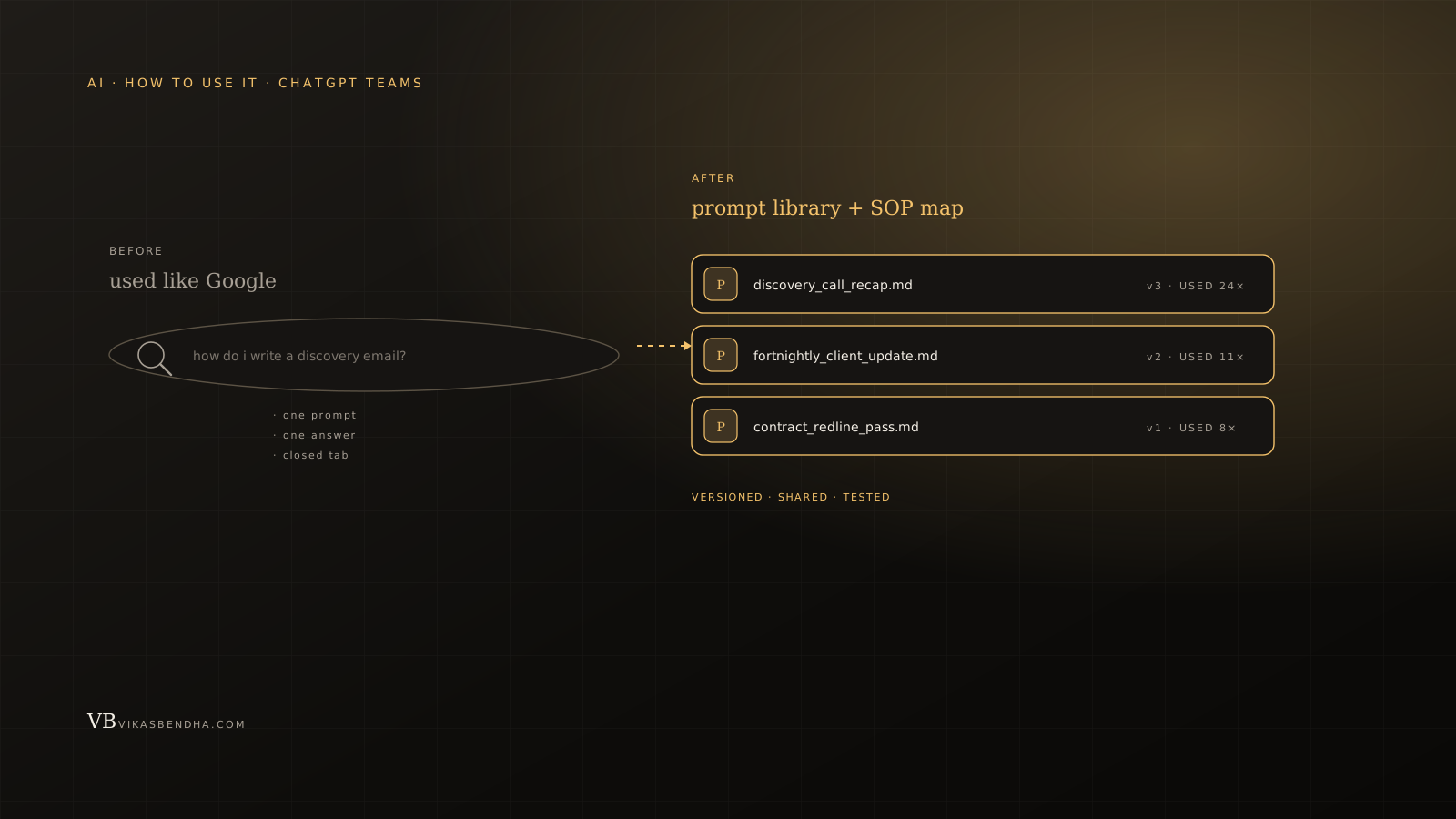
Walk into ten companies that bought ChatGPT Teams or Enterprise this year. In nine of them, the actual on-screen behavior of the average user looks like this: they type a question, paste a paragraph, get a paragraph back, and close the tab. Same shape as a Google search, with a slightly more verbose result.
That isn't an AI problem. It's a rollout problem. And after running this audit for several dozen teams, the gap between the few that get value and the many that don't is almost entirely procedural — not technical.
Why teams default to single-shot
Three forces collapse usage to the lowest-effort form. First, the IT team installs the licenses and walks away — there's no second-week training. Second, the company's existing knowledge isn't in the tool, so the model can't answer questions from your operating reality, only from its training data. Third, no one writes down what's working. Each person reinvents the same prompts in private and then stops bothering when the answers are mid.
By month three, the licenses are on autopay and most users are back to Google plus the occasional rephrasing of an email.
The 5-step rollout that actually changes behavior
- Week 1 — pick three workflows that, if automated, save the most hours per week. Not the sexiest. The slowest. We map them on a whiteboard, agent by step.
- Week 2 — load company knowledge. Operating manuals, brand guidelines, deal templates, escalation paths. Fed into a shared GPT or workspace project so every prompt starts grounded.
- Week 3 — install a prompt library. Five to ten saved prompts per role, named like SOPs ("Draft a discovery-call recap", "Generate a fortnightly client update"). Lives in Slack or Notion. Versioned.
- Week 4 — pair every team member with a single agentic workflow they own and run weekly. Not a workshop. Real output that goes to a real recipient.
- Week 5 — review, prune, expand. The prompts that nobody used get cut. The ones that worked get formalized into SOPs.
Prompt library architecture (the part most miss)
A prompt library isn't a Notion page of clever paragraphs. It's a versioned, named, and tested set of templates with three traits: an explicit input shape (what the user pastes in), a contract for the output (length, tone, structure), and a fallback (what to do when the answer is wrong). Treat each prompt like a function in a codebase. Same hygiene.
The single biggest unlock most teams find: every prompt that produces something a client or stakeholder will read should end with the line "List any assumptions you made." That one line catches more silent errors than any review process.
The SOP map
Once the prompt library exists, the next move is to map standard operating procedures onto it. SOPs are how the company actually runs — onboarding a client, writing a proposal, closing a sprint. Every step in every SOP gets one of three labels: human, AI-assisted, or AI-led with review. The human steps stay human. The other two get a prompt or a workflow assigned. Now usage is structural, not optional.
Teams that complete this exercise typically cut the time-on-task for their three biggest workflows by 40-70%. That's the conservative end. The aggressive end is reorganizing the company around what it now takes to ship the same output.
What success looks like
Three signals tell you the rollout took. Tickets that used to need a senior person now resolve at the first responder. Onboarding new staff drops from weeks to days because the prompt library does the introduction the manager used to. And the conversations in standup change shape — fewer status updates, more decisions, because the status is already in the agent's morning brief. Want this installed for your team? See AI enablement and coaching, or read Inside a 1-operator AI studio for the studio version of the same playbook.
Sources & further reading