AI · Jobs · 7 min read · Apr 12, 2026
AI didn't take your job. The middle of the org chart did.
Two years of "AI is replacing X" headlines have buried the actual pattern. The disappearing layer isn't entry-level. It's the middle. Here's why, and what to do if you're sitting in it.
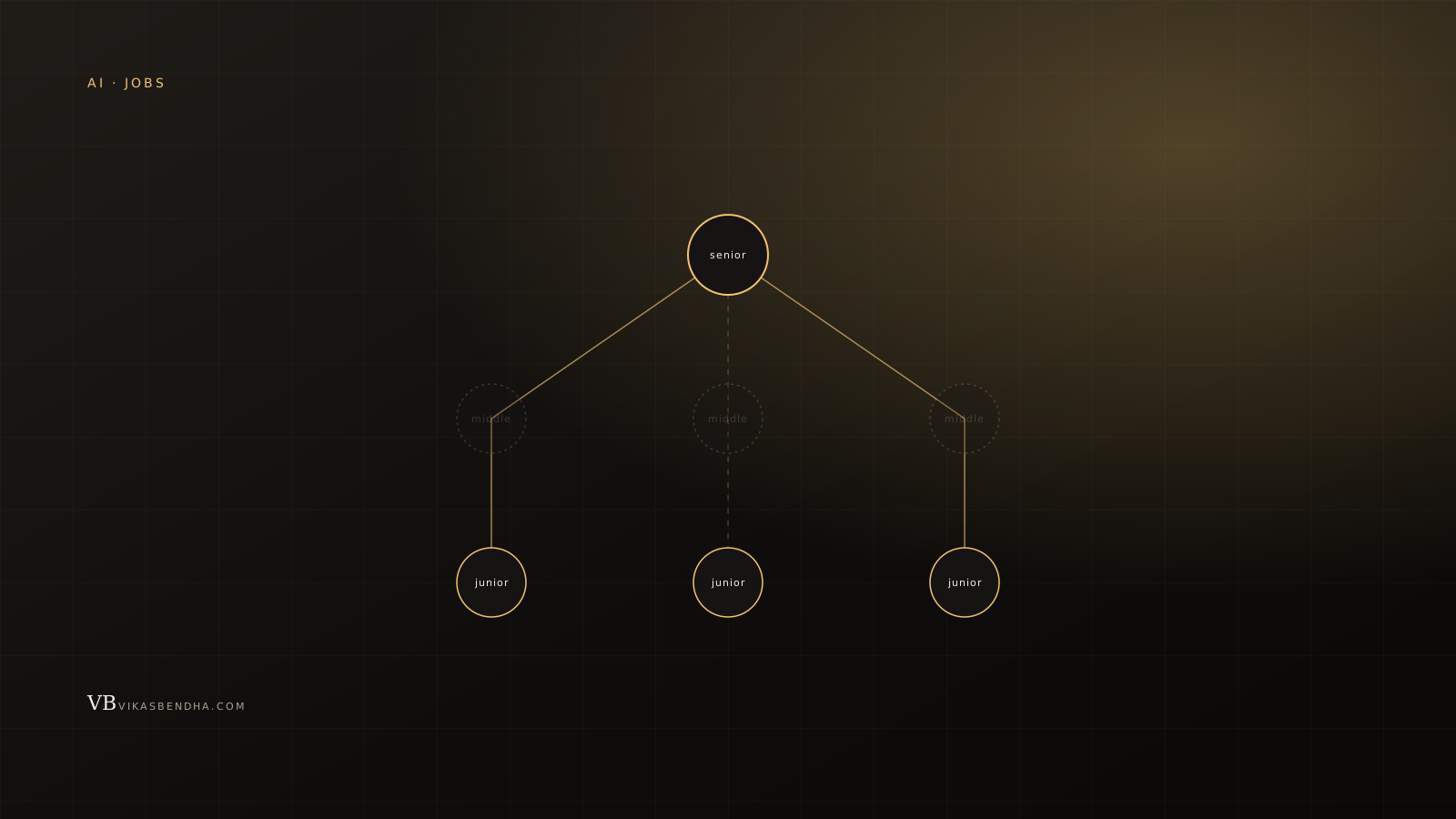
The dominant story about AI and jobs is wrong in a specific, useful way. It frames the loss as a horizontal cut — "AI is taking copywriting," "AI is taking junior coding," "AI is taking customer support." The actual cut is vertical, and once you see it the next year of decisions gets clearer.
The pattern across every team I've worked with
Senior people are getting more leverage. Juniors are getting more responsibility, faster. The middle — the layer that used to coordinate, translate, supervise, review, and move work between juniors and seniors — is being squeezed from both sides. Senior staff augmented with agents do work that used to require a manager. Juniors augmented with agents produce output that used to require a coordinator's review.
The middle didn't get bad at its job. The job got smaller.
Why the middle got hit first
The work most threatened by AI is the kind that turns one form of structured information into another: a brief into a draft, a draft into review notes, a meeting into an action list, a Jira ticket into a stand-up update. That's the bulk of what middle layers do, and it's the one thing the current generation of models is undeniably excellent at.
What's still safe is everything that requires originating ideas (seniors) or creating raw materials (juniors with tools). The transformation layer in the middle is where the cost-collapse hits hardest.
If you're in the middle right now
Three honest moves, in order of difficulty.
- Move down a layer and re-pick up the craft. The senior who codes, designs, writes, sells is more durable than the senior who only reviews. Get back into the materials.
- Move up a layer and own outcomes, not output. Owning a number is more durable than coordinating a process. The teams I see thriving in this transition are the ones where every middle person has a P&L line attached to them.
- Move sideways into work where the bottleneck isn't transformation. Sales, partnerships, fundraising, hiring, complex negotiation — anything where the value is in the trust you've accumulated, not in the work you produce.
The reframe most teams need
Companies are reading their layoffs as cost-cutting and missing the structural shift. The right read is: with agents in the loop, the optimal team shape is flatter and rougher around the edges. Fewer people, each doing wider work, with the agent doing the smoothing that used to require a manager.
The companies still trying to keep the org chart from 2022 and add AI on top are spending twice and getting worse output. The ones rebuilding the chart around agent-augmented operators are pulling ahead and doing it quietly.
What this means if you're hiring
Stop hiring middle. Hire senior or hire junior, both with the explicit expectation that they'll be working alongside agents. The middle role you used to need to glue them together is now a tooling problem, not a people problem. That's not a story most HR pages have caught up to yet, but it's the one running through every healthy team I've seen this year. If you'd rather buy the operator than rebuild the chart, the studio offers AI enablement and coaching for exactly this transition.
Sources & further reading