Stack · 12 min read · Mar 1, 2026
The toolchain of a 1-person studio handling 12 clients
The exact stack — nine tools — that lets a one-operator studio ship like a six-person team. With prices, picks, and what I'd cut if forced.
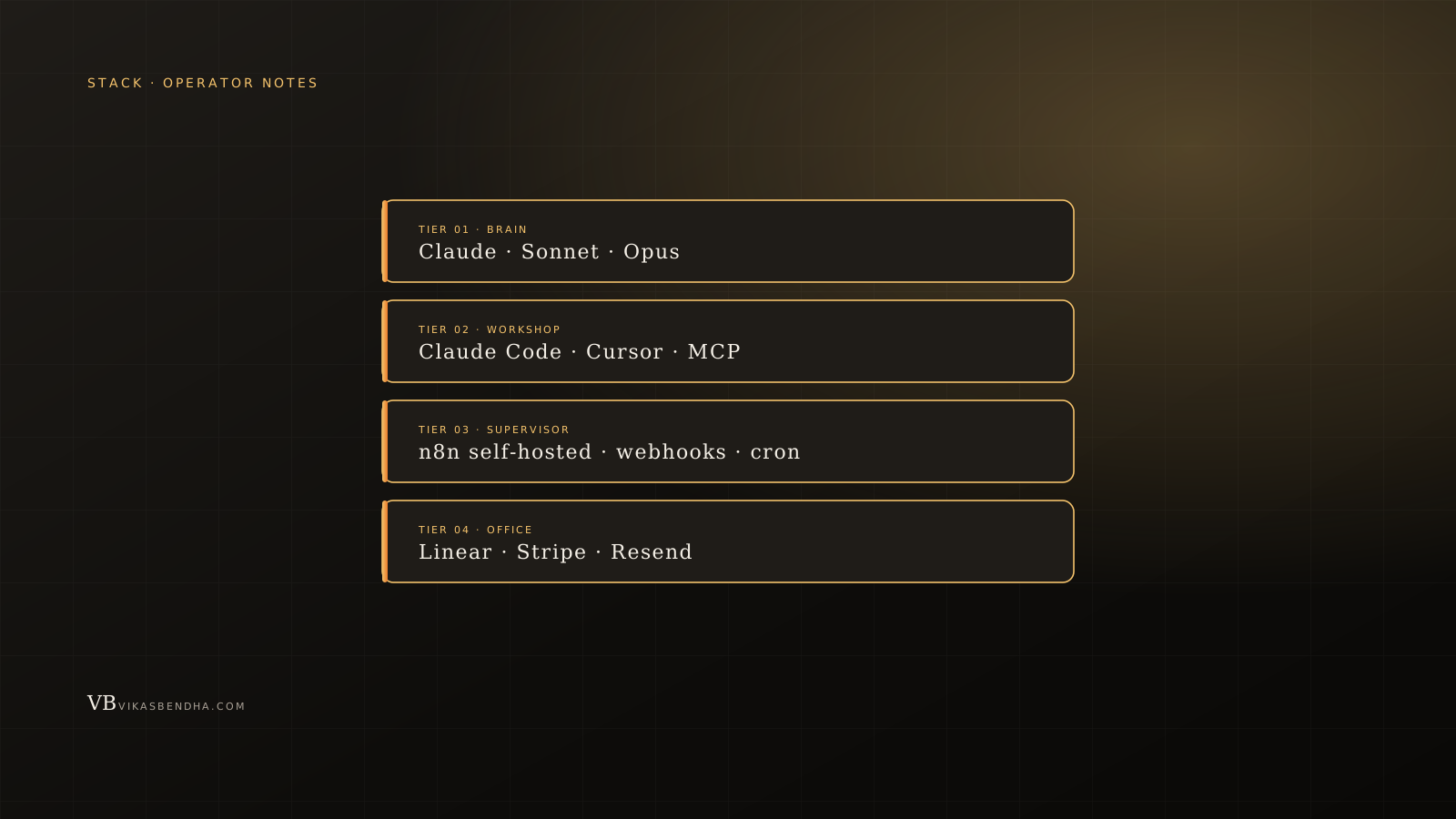
A studio of one has a different optimization problem than a studio of ten. With ten people you're solving for coordination. With one person you're solving for context-switching. The stack below is built for the second problem, and after running it for the better part of a year, I'm comfortable saying it's the cheapest setup that still feels like a real shop.
Tier 1 — the brain
Two models, used differently. Claude Sonnet 4.6 is the daily driver — code review, drafts, the morning brief, anything where I want a careful collaborator. Claude 4.7 Opus comes out for the harder pieces of architecture and the writing where the difference between good and great compounds. Roughly two hundred dollars a month at current pricing for unlimited use across both via the team plan.
Tier 2 — the workshop
Cursor and Claude Code do the actual building. Both connect via MCP servers to Figma, Postgres, GitHub, and the n8n queue, which means the model can read the design, query the staging database, open a PR, and hand off to deploy without me touching three different windows. The MCP layer is the single most important thing that changed about my stack this year.
Combined cost: about $40/month for Cursor, free for Claude Code at the team plan tier.
Tier 3 — the supervisor
n8n, self-hosted on a $20/month VPS. This is the canvas where every recurring trigger lives — webhooks from Stripe, scheduled imports from CRM exports, retry queues for flaky vendor APIs. The model is the worker. n8n is the supervisor — it tells the model when to start, where to write, and what to do if it fails.
I used to host this on a hosted plan. Self-hosting saves money on volume and lets me put MCP-compatible custom nodes in front of any tool I want. Cost: a domain and a small VPS.
Tier 4 — the office
Linear is the source of truth for what's promised and what's done. The triage agent writes here every morning. Notion holds long-form documents and client-facing wikis. Slack is shared with one or two clients per project for async, never for status updates. Stripe runs billing. Resend handles outbound mail with full DKIM/SPF/DMARC compliance. Postmark sits behind it for transactional email when deliverability is critical.
The economics
Add it up: roughly $300-400/month for the entire stack, all-in. The studio carries about 10× that in revenue per month at the small-engagement end of its range. The stack is a rounding error compared to a single hour of senior consulting time.
The bigger cost isn't the bill — it's the discipline. The stack only works if you keep the boundaries between tiers crisp. Builders never become supervisors. The brain doesn't run cron jobs. Linear is never bypassed for "just this one" Slack-only commitment.
What I'd cut if I had to
If I had to drop to a $100/month operating budget, here's the order I'd cut. Postmark first — Resend handles 95% of cases. Then the second model — single Sonnet only, no Opus. Then the VPS — back to n8n cloud. Then Cursor — Claude Code alone is enough for most of what I do. The brain stays. The supervisor stays. Everything else is replaceable.
How to copy this
Three rules. Hold one model as your daily driver until it's exhausted, not the menu of three you'll think you want. Put a supervisor in front of every recurring trigger before the second incident. Pick one source of truth for promised work and don't let any side channel write to a different one. The studio model and weekly checkpoints behind this stack are written up in Inside a 1-operator AI studio, and the conceptual reset that drove the rebuild is the agent stack reset.
Sources & further reading